 Listicle
What Are the Three C's of Grief? A Gentle Guide
Last Updated: November 19, 2026
Quick Summary
The three C's of grief are Choose, Connect and Communicate. Choose means making space for personal choice in how you grieve, Connect means staying in touch with support and community, and Communicate means finding ways to express what you feel and need.
- Different sources use different C-words, so check which framework you are reading.
- Choose, Connect, Communicate suits adults in the messy middle of grief.
- Challenge, Change, Connection tends to suit people working with a counsellor.
- Cause, Contagion, Care is written for adults supporting a grieving child.
- Try naming one feeling and one need rather than summarising everything.
Table of Contents
- What Are the Three C's of Grief?
- Why Different Sources Name Different Three C's
- Choose: Making Space for Personal Choice in Grief
- Connect: Finding Emotional Support and Community
- Communicate: Expressing Feelings and Needs
- How to Cope with Grief After a Death
- What to Say to Someone Who Is Grieving
- Grief Support Activities and Gentle Reflection
- How Long Does Grief Last?
- Frequently Asked Questions
What Are the Three C's of Grief?
If you have gone looking for a way to understand your grief, you have probably met the three C's of grief somewhere online. This guide from The Vitality Seeker walks through the most common version, Choose, Connect and Communicate, and explains why you will also see other C-words attached to the same idea.
The three C's of grief are a simple framework for coping with loss: Choose means making space for personal choice in how you grieve, Connect means staying in touch with support and community, and Communicate means finding ways to express what you feel and need.
None of this is a rulebook. Think of it as a set of gentle prompts you can return to on the days when everything feels like too much.
Why Different Sources Name Different Three C's
Here are the versions you are most likely to meet, and what each one is actually for.
Choose, Connect, Communicate. This is the most common version in general grief writing.
Challenge, Change, Connection. This version appears more often in counselling and therapeutic writing.
Cause, Contagion, Care. This one comes from writing about children's grief. Cause is how a child understands what happened.
You may also see three C's built specifically around holidays, or around the therapy process itself. These are narrower tools for narrower situations.
A simple way to tell them apart is to ask what question the framework is answering.
It also helps to know that none of these frameworks is a clinical diagnostic tool.
If you are curious how the better-known staged models compare, our gentle guide to the seven stages of grief explains them without asking you to fit yourself into a timeline.
Here is a quick comparison of the three versions you are most likely to meet, and who each one suits.
| Version | What each C means | Best suited to |
|---|---|---|
| Choose, Connect, Communicate | Choose: reclaim small decisions; Connect: stay within reach of support; Communicate: find words for feelings and needs | Adults after any kind of loss, in the messy middle of grief |
| Challenge, Change, Connection | Challenge: assumptions grief shakes loose; Change: adjustments to daily life and identity; Connection: rebuilding belonging | People further along, or working with a counsellor |
| Cause, Contagion, Care | Cause: how a child understands what happened; Contagion: fear grief might spread; Care: reassurance and routine | Parents, carers and educators supporting a grieving child |
Choose: Making Space for Personal Choice in Grief
Choosing in grief means deciding what you actually want, rather than what you think you should want. That might be choosing to skip a family gathering, to keep a ritual, or to spend a Sunday doing nothing at all.
Grief takes choice away in so many ways. The death happened whether you were ready or not. What you can reclaim is the smaller daily decisions: who you see, what you keep, how much you take on.
Some people find it supportive to write down three choices each morning. Not goals. Just small, honest preferences. If a choice feels wrong once you try it, you are allowed to change your mind.
Connect: Finding Emotional Support and Community
Connection in grief means staying within reach of people and services that help you feel less alone. It does not mean being social every day. It means having at least one thread back to the world.
This is often the hardest C. Friends drift, invitations stop, and the silence can feel personal. Many grieving people find that connection has to be rebuilt deliberately rather than waited for.
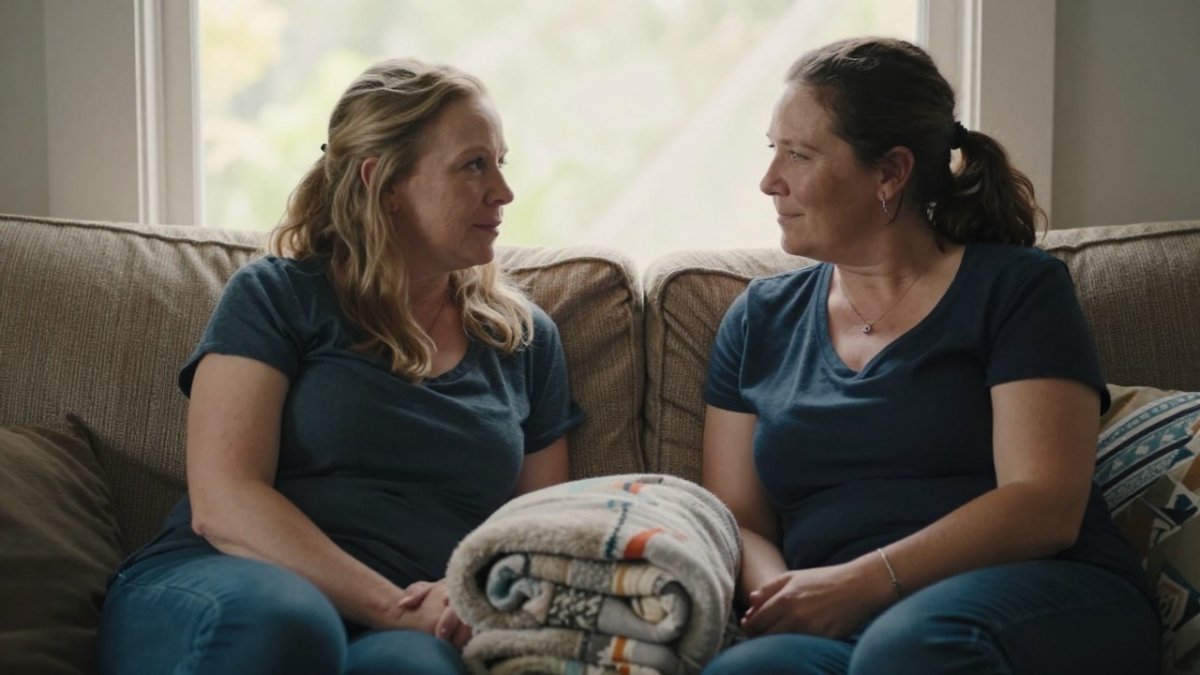
There are practical places to start. Our article on grief support services and finding help that fits you covers the options, and if leaving the house feels like too much, these gentle online grief support options may suit you better. If you are weighing up counselling against a group, this comparison of grief counselling and support groups can help you decide which form of connection to try first.
Communicate: Expressing Feelings and Needs
Communicating in grief means putting words, or something like words, to what is happening inside you.
Grief can make language feel useless.
A common pattern is that grieving people can say what they feel but freeze when asked what they need.
Asking a friend for support.
"I am having a hard week. I do not need you to fix it.
Declining an invitation without closing the door.
Telling people what not to say.
"I know you mean well, but 'everything happens for a reason' lands badly for me right now.
Asking for practical help.
Talking to a workplace or study contact.
"I am grieving a death in my family and my concentration is affected.
Talking to a health professional.
"I want to talk about how I am going with my grief.
Adapt these, shorten them, or ignore them. What matters is that your needs get a sentence of their own.
Watch out: communicating once does not mean you have communicated.
How to Cope with Grief After a Death
Coping after a death usually comes down to small, repeatable acts of care rather than one big recovery. Many people find the early weeks are carried by practical tasks, and the harder emotional work arrives later, once the paperwork stops.
A few things that often help:
- Keep a simple routine around sleep, meals and one daily shower
- Tell two or three people what you actually need this week
- Let the memorial or funeral be shaped by what feels meaningful to you
- Move gently, even if it is a short walk to the end of the street
- Protect one part of the day that belongs to no one else
If you are facing this without much support around you, our guide to coping with bereavement alone goes further into the practical side.
What to Say to Someone Who Is Grieving
Say something simple and true, and do not try to explain the loss. "I am so sorry" is enough. So is "I do not know what to say, but I am here."
People often avoid the grieving person because they are afraid of saying the wrong thing. In practice, silence and absence hurt far more than an imperfect sentence. Acknowledging the death directly is usually kinder than talking around it.
Words that tend to land badly include "at least", "everything happens for a reason", and any comparison to someone else's loss. You do not need to make it better.
Watch out: promising "let me know if you need anything" puts the work back on the grieving person. Offer something specific instead, like a meal on Tuesday or a lift to an appointment.
Grief Support Activities and Gentle Reflection
Grief support activities work best when they are low-pressure and easy to abandon. Some people find writing helpful. Others prefer movement, sound, or simply sitting somewhere quiet with a candle.
A few gentle options:
- Keep a notebook and write one sentence a day, no more
- Create a small earth altar with a stone, a flower, or a photo of the person who died
- Try a short guided meditation when your nervous system feels wound up
- Light a candle on significant dates and sit with it for five minutes
- Sound healing or Reiki may feel supportive for some people as a way to rest
Spiritual practices like these are personal and reflective. They are not a treatment for grief, and they are not a substitute for medical or mental health care. Adapt or skip any part that does not feel right for you.
Here are a few reflection questions to sit with, one at a time:
- Which of the three C's feels most out of reach right now?
- What is one choice I could make this week that is genuinely mine?
- Who is one person I could send an honest message to?
- What would I want someone to say to me, and can I say it to myself?
How Long Does Grief Last?
Grief has no fixed timeline, and anyone who offers you one is guessing. Many people find the intensity shifts over months and years rather than ending, and that significant dates and anniversaries can bring it back sharply.
The better question is not how long it lasts but whether you are supported while it does. If your grief is making daily life unmanageable, or you are feeling stuck and unable to function for a long stretch, speaking with a qualified health professional is a sensible next step (Grief and loss - the effects of grief and how to deal with it). Lifeline is available at any hour if things feel overwhelming (Lifeline crisis support).
At The Vitality Seeker, we do not believe you need to be fixed. Liz's own experience of losing her mother to cancer, alongside years of living with chronic illness, shapes a practice built around gentle support rather than pressure. Our Reiki treatment sessions and the nine-week Beyond the Layers program are there for anyone who wants company while they reconnect with themselves.
Grief does not ask you to perform healing on a schedule. It asks for small, honest choices, a thread of connection, and permission to say how you really are.
Frequently Asked Questions
What does choose, connect and communicate mean in grief?
This version of the three C's of grief describes three gentle actions. Choose means making decisions that feel right for you, from small daily choices to how you mark significant dates. Connect is about staying in touch with people who support you, whether that is family, friends, a grief group or a professional. Communicate is about expressing what you feel and what you need, even if that is simply saying you are not okay today. None of these are steps you must complete in order, and each can be adapted to suit your own circumstances.
Is there a right way to grieve?
There is no single correct way to grieve. Research and clinical guidance consistently describe grief as individual, with wide variation in how people feel, express emotion and move through loss. Some people cry often, others feel numb, and some find meaning through ritual or creative expression. Frameworks like the three C's of grief can offer structure, but they are not rules. If you feel pressure to grieve in a particular way, it may help to speak with a grief-informed counsellor who can support your own process without expectations.
When should I seek grief counselling?
Some people find grief counselling helpful at any stage, not only when things feel unmanageable. It may be worth reaching out if grief is affecting your sleep, work or relationships for an extended period, if you feel stuck or isolated, or if you are having thoughts of harming yourself. In an emergency, contact Lifeline on 13 11 14 or emergency services on 000. Otherwise, your GP can discuss a mental health care plan and refer you to a qualified counsellor or psychologist.
What grief support activities can I try at home?
Gentle grief support activities include journaling a letter to the person you lost, creating a small remembrance ritual on anniversaries or holidays, or using a structured reflection worksheet to track how you feel over time. Physical movement, time in nature and creative projects can also help. Try one option at a time and notice what feels supportive rather than what you think you should be doing.
How do I support someone who is grieving?
Simple, specific offers often help more than general advice. Try saying you are sorry for their loss, naming the person who died, and asking what would feel supportive today. Practical help such as bringing a meal, driving them to appointments or helping with errands can reduce pressure. Avoid phrases that compare their grief to others or suggest they should be further along. If they want to talk, listen without rushing to fix anything, and check in again in the weeks and months after the funeral when support often fades.