 Listicle
Grief Support Online in Australia: 8 Gentle Options
Table of Contents
- Finding Grief Support Online in Australia That Fits You
- Grief Counselling vs Grief Support Groups: Which Suits You?
- Online Grief Counselling: What to Expect From a First Session
- Grief Support Groups Online: Forums, Groups and Communities
- Support After Losing a Parent: Grief Support After Losing a Parent
- Free Helplines and Crisis Support: When You Need Someone Now
- How to Choose What Feels Right (and What to Ignore)
- A Gentle Closing Thought
- Frequently Asked Questions
Last Updated: October 16, 2026
Finding Grief Support Online in Australia That Fits You
Grief rarely announces itself neatly. If you're searching for grief support online in Australia, you've already taken a brave step.
This guide walks through gentle options, from free helplines to online counselling and peer communities, and looks at how to choose between them and what to do when nothing seems to fit.
One thing to hold onto: there is no single path or timeline for grief. What helps one person may not help another, and that's not a failure. It's just how grief works.
Grief Counselling vs Grief Support Groups: Which Suits You?
Grief counselling is one-to-one professional support focused on your story. Grief support groups bring people with similar experiences together to share and listen. Neither is better, many people move between them as their needs change.
What a Counsellor Offers That a Group Cannot
A counsellor gives you undivided attention and a private space to explore complicated feelings, including anger, guilt or relief, tailored to your circumstances, a bereavement, a chronic illness, or a loss others don't see.
Counselling usually runs as a scheduled 50 to 60 minute session by video or phone, at a regular time, that regularity gives your grief a container.
Some people see a counsellor privately and pay per session.
What Peer Groups Offer That Counselling Cannot
Peer support offers something professionals can't: the quiet recognition of sitting with people who have been there. You hear how others carry their grief, and often feel less alone.
Online groups come in a few distinct shapes, and the shape matters more than the size:
- Moderated forums, where you read and post in your own time. Good for 2am, when nothing else is open.
- Live video meetups, usually weekly or fortnightly, with a facilitator and a small number of participants. Good if you want to be seen and heard, not just read.
- Closed groups for a specific loss, a parent, a partner, a child, a death by suicide, or a loss that isn't a death at all.
Groups are often free or low-cost, and many run online, which helps if you live remotely or find travelling difficult. Most don't require a referral, and you can usually observe before you speak.
How to Tell Which One You Actually Need
A few honest questions can narrow it quickly:
- Do you want to be guided, or accompanied? Guided points to counselling. Accompanied points to a group.
- Do you want privacy, or recognition? Privacy points to counselling. Recognition points to a group.
- Is the loss complicated by something you'd rather not say aloud in a room? Counselling first may feel safer.
Online Grief Counselling: What to Expect From a First Session
A first online grief counselling session is usually a conversation, not an assessment. The counsellor will ask what brought you there, what your loss has been like, and what you're hoping for.

Sessions typically run for around an hour by video or phone. You can bring notes, pause, or say "I don't want to talk about that yet." A good counsellor will respect all of it.
Services such as Online Psychologist's grief and loss counselling page describe offering sessions with psychologists, and some list a free initial consultation. Grief Australia also provides counselling alongside its online resources, as outlined on Grief Australia's website.
Grief Support Groups Online: Forums, Groups and Communities
Online grief support groups range from moderated forums to live video meetups. Griefline runs national support alongside community forums, and its resources cover many different kinds of loss, as described on Griefline's website.
Group culture matters more than size. A small, well-moderated forum often feels safer than a large, busy one.
When you join, take your time. Reading without posting is a legitimate way to participate.
Support After Losing a Parent: Grief Support After Losing a Parent
Losing a parent can bring a strange mix of emotions: deep sadness, relief, anger, and a shift in how you understand yourself. Grief support after losing a parent often needs to hold all of it at once.
I write about this from lived experience.
Some people find parent-loss groups especially helpful because the specific weight of that relationship is understood without explanation.
Free Helplines and Crisis Support: When You Need Someone Now
When you need someone immediately, free 24/7 support exists. Lifeline can be reached on 13 11 14 and is available around the clock, as listed on Lifeline's website.
These services aren't grief-specific counselling programs, but they are there in the moment, which matters.
If you are in immediate danger, call 000.
For anyone navigating suicidal thoughts alongside grief, please reach out to one of these services rather than waiting for the right moment. Support is available now.
How to Choose What Feels Right (and What to Ignore)
Most guides hand you a list and wish you luck. The right starting point depends less on what's available and more on what you need this week.
Start With Urgency, Not Preference
Before anything else, ask how you're travelling right now.
- If you're in immediate danger, call 000.
- If you're in crisis or having thoughts of suicide, contact Lifeline on 13 11 14 or Beyond Blue. Both are free, confidential and available at any hour.
- If you're safe but struggling to function day to day, a GP visit is a sensible next step. A GP can talk through options, check your overall health, and, if appropriate, prepare a Mental Health Treatment Plan, which can make sessions with certain registered practitioners eligible for a Medicare rebate. Eligibility rules and rebate amounts change, so confirm current details with your GP or on the official Services Australia website.
Urgency first, preference second. That order saves a lot of false starts.
Match the Format to How You Actually Communicate
Different people open up in different conditions, and forcing the wrong format is a common reason support doesn't stick.
| If you... | A good first try is... | Because... |
|---|---|---|
| Need someone right now | Lifeline, Beyond Blue | Free, confidential, any hour |
| Want private one-to-one support | Online grief counselling | Focused entirely on your story |
| Want to feel less alone | Moderated forums, peer groups | Shared experience, no explaining required |
| Prefer to read before you speak | Forums and self-paced resources | No pressure to perform or respond |
| Want structure and a set timeframe | A structured peer program | Same people, same weeks, a clear shape |
| Are supporting children or caring for someone | Carer and family-specific resources | Tailored to different ages and roles |
| Find talking hard but want to do something | Gentle reflective practices | A way in that isn't verbal |
Consider Access, Not Just Availability
A service existing isn't the same as it being usable for you. Worth checking before you commit:
- Regional and remote access. Online options remove travel, but check whether you need reliable internet and a private space. Phone-based support can be a better fit when bandwidth is patchy.
- Disability access. Ask about captions, transcripts, hearing loops, screen-reader compatibility, or the option to type rather than speak.
- Language and cultural needs. Ask whether an interpreter can be arranged, and whether a service offers culturally informed support. It's a reasonable question and services expect it.
What to Ignore
Some advice is worth setting down:
- Pressure to grieve a certain way. There is no correct sequence of stages and no deadline.
- Anyone who dismisses your loss because it wasn't a death, or wasn't recent, or wasn't 'close enough'.
- The idea that you should be further along. Grief doesn't run on a schedule, and neither should you.
If Nothing Seems to Fit
This happens, and it doesn't mean you're beyond help. A few things worth trying:
- Change the format, not the goal. If talking felt like too much, try reading or writing. If reading felt too passive, try a live group.
- Change the specificity. A general grief group may feel too broad; a group for your particular kind of loss may feel like coming home.
- Ask a service what else they offer. Many organisations run several programs, and the person answering the phone can often point you somewhere you hadn't considered.
A Gentle Closing Thought
Grief support online in Australia is broader than most people realise, and there's no wrong door to walk through first. Try one option. If it doesn't fit, try another.
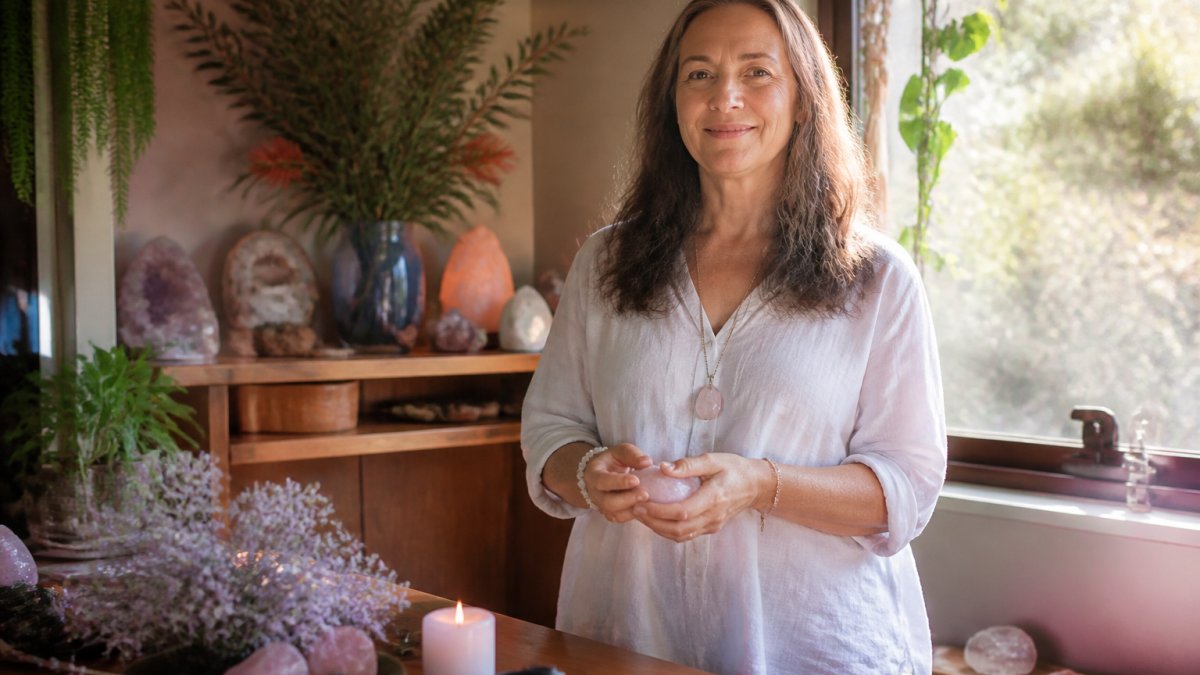
If you'd like support that honours where you are right now, The Vitality Seeker offers trauma-informed grief coaching, Reiki and crystal healing, and distance sessions, all held without any expectation that you change who you are.
What would feel kindest to you this week: a conversation, a quiet read, or simply permission to rest?
Frequently Asked Questions
How can I cope with the grief of losing a parent?
There is no single way, and no timeline you have to follow. Some people find it helps to talk with a grief counsellor, join a peer group, or read about grief at their own pace. Others lean on family, friends, or gentle routines that feel grounding. Grief support after losing a parent can look different from week to week, and that is normal. If your grief feels overwhelming or you are struggling to function day to day, speaking with a qualified health professional is a good next step.
What kinds of grief support are available online?
Online grief support in Australia includes individual counselling with a psychologist or counsellor, peer support groups and community forums, free helplines, and self-guided reading. Some services offer video sessions, others are phone-based, and some are text or forum-based. Cost, eligibility and availability vary, so it helps to check each service directly. If you are unsure where to start, a free helpline can help you talk through what you need before committing to anything.
What is the difference between grief counselling and a grief support group?
Grief counselling is one-to-one work with a trained professional who can help you explore your loss, your reactions and ways of coping. A grief support group brings together people with similar experiences, guided by a facilitator or run as peer support. Counselling offers focused, private attention, while groups offer connection and the relief of not feeling alone. Many people use both at different times, and there is no rule about which to try first.
Is online grief counselling helpful?
Many people find online grief counselling helpful because it removes travel, fits around work or caring responsibilities, and can feel less intimidating than walking into a clinic. It also opens up options if you live regionally or have limited mobility. That said, it is not for everyone. Some people prefer being in the same room as their counsellor. If you are unsure, you could try a single session and see how it feels before deciding whether to continue.
Can I get grief support online if I'm not ready to talk?
Yes. Not everyone is ready to speak about their loss, and that is okay. Self-guided resources, reading about grief, and moderated online forums let you engage at your own pace without pressure to share. Some people read for weeks before posting a single word. If and when you feel ready, you can move to a group or a counsellor. There is no right order, and stepping back at any point is allowed.
Grief can feel like it has taken over everything, but you don't have to move through it alone or on anyone else's schedule. At The Vitality Seeker, our trauma-informed grief coaching, Reiki and crystal healing, and the nine-week Beyond the Layers program are designed to help you reconnect with your vitality and move from overwhelm toward calm. Get started with The Vitality Seeker and take the next gentle step toward feeling like yourself again.