 Ultimate guide
How can you learn to live fully again with chronic illness?
Last Updated: October 26, 2026
Quick Summary
Learning to live fully again chronic illness means tending to both the emotional and physical impact of your condition by reconnecting with your body, honouring your energy through boundaries, creating space for reflection, and exploring spiritual practices that feel genuine to you.
- Grief from chronic illness is valid regardless of how serious your condition is, and it deserves space without judgment.
- The boom-and-bust cycle of pushing too hard then crashing can be prevented through pacing and activity management.
- Spiritual practices like Reiki, moon rituals, tarot and journaling work best when chosen by energy level rather than ambition.
- Rebuilding your identity after diagnosis means grieving who you were while discovering who you're becoming beyond your illness.
- Support that honours your whole self, body, emotions, spirit and needs, makes a profound difference in navigating chronic illness.
Table of Contents
- Understanding the emotional impact of chronic illness
- How to deal with frustration from chronic illness
- Coping with chronic illness when grief surfaces
- Practical steps for coping with chronic illness
- Spiritual practices for living fully again
- Rebuilding identity and meaning beyond illness
- Finding support that honours your whole self
- Frequently Asked Questions
Understanding the emotional impact of chronic illness
Living with a chronic condition reshapes how you see yourself, move through the world and relate to others.
When your body stops cooperating the way it used to, grief follows. You might grieve the version of yourself you were before diagnosis, the plans you put on hold, or the energy you once took for granted.
At The Vitality Seeker, we work with people navigating exactly this terrain.
The emotional toll of chronic illness also shows up as frustration, anger and disconnection from your body.
How to deal with frustration from chronic illness
Frustration with chronic illness often comes from the gap between what you want to do and what your body can manage.
One thing that helps is naming the frustration without judgment.
Frustration builds when you push against your limitations rather than working with them. A common pattern is the boom-and-bust cycle: you feel a little better, do too much, then crash, and the crash fuels more frustration.
It can help to separate frustration into two buckets: what is within your influence today, and what is not. Within your influence might be how you respond to a flare, asking for help with one task, or choosing a quieter version of a plan. Outside your influence might be other people's understanding, the weather, or a bad symptom day.
Journaling can help here. Write out what frustrated you, what you wanted to happen, and what actually happened.
If frustration is tipping into persistent low mood, anxiety or hopelessness, it is worth speaking with a qualified health professional such as your GP or a counsellor. You deserve support, and asking for it is not a failure.
Coping with chronic illness when grief surfaces
Grief and chronic illness often arrive together, or grief emerges later as you process what the illness means for your life.
Grief doesn't follow a timeline. You might feel fine for weeks, then suddenly the weight of it hits you. You might grieve your health while also grieving other losses, a relationship, a job, a version of yourself.
One of the most important things we emphasise at The Vitality Seeker is that you don't have to process grief alone. How to Cope With Grief and Chronic Illness goes deeper into the specific intersection of grief and chronic illness, offering validation and practical next steps for when you're ready to seek support.
Grief also shows up physically. You might feel heavier, more tired, or more aware of pain. Your nervous system is processing loss, and that takes energy. Being gentle with yourself during these periods isn't optional, it's necessary.
Practical steps for coping with chronic illness
1. Reconnect with your body through gentle awareness
Your body isn't your enemy, even though it might feel that way sometimes. Reconnecting with it, gently, is part of learning to live fully again with chronic illness.
This doesn't mean forcing yourself into yoga or any specific practice. It means noticing what your body needs right now, not what it "should" need. Hunger, rest, movement, stillness, touch and space are all valid needs.
Gentle body awareness practices can help. Some people find that simply placing a hand on their heart and taking three slow breaths helps them feel more present in their body.
2. Set boundaries that honour your energy
Energy management is one of the most practical tools for living with chronic illness. You have a limited amount of energy each day, and you get to choose how to spend it.
Boundaries aren't selfish. They're essential. A boundary might be saying no to social events when you're already depleted. It might be asking someone to help with a task you'd normally do yourself.
Setting boundaries also means being honest about what drains you and what nourishes you. Some activities feel restorative even when they're effortful. Pay attention to these patterns. Your energy is precious, and you get to protect it.
3. Create space for reflection and stillness
In a world that prizes productivity, stillness can feel like failure. But for people living with chronic illness, stillness is often where healing happens, where you can listen to yourself without the noise of "should."
Reflection doesn't require special tools.
Many people find that regular quiet time, even ten minutes a day, helps them feel more connected to themselves. It creates space to notice what you're feeling, what you need, and what matters to you right now.
4. Explore spiritual practices that feel right for you
Spiritual practices can support your journey of learning to live fully again with chronic illness, but they work best when they feel genuine to you, not imposed from outside.
Some people find that practices like Reiki Treatment create a sense of safety and care in their bodies.
These practices are invitations, not prescriptions. If something doesn't resonate, you can skip it. If something feels supportive, you can explore it further. There's no hierarchy, only what feels right for you.
These four foundational approaches can help you reconnect with yourself and manage your energy as you learn to live with chronic illness.
| Approach | What it involves | Why it helps |
|---|---|---|
| Reconnect with your body through gentle awareness | Notice what your body needs right now without forcing practices | Helps you feel present in your body rather than at odds with it |
| Set boundaries that honour your energy | Say no when depleted, ask for help, protect rest time | Prevents boom-and-bust cycles and preserves energy for what matters |
| Create space for reflection and stillness | Sit quietly, journal, walk slowly, or let thoughts move through you | Helps you listen to yourself and notice what you need |
| Explore spiritual practices that feel right for you | Try Reiki, crystals, tarot, prayer, nature or creative expression | Supports connection to something larger than your illness |
Spiritual practices for living fully again
Reconnecting with yourself beyond your illness often involves practices that help you feel held and seen.
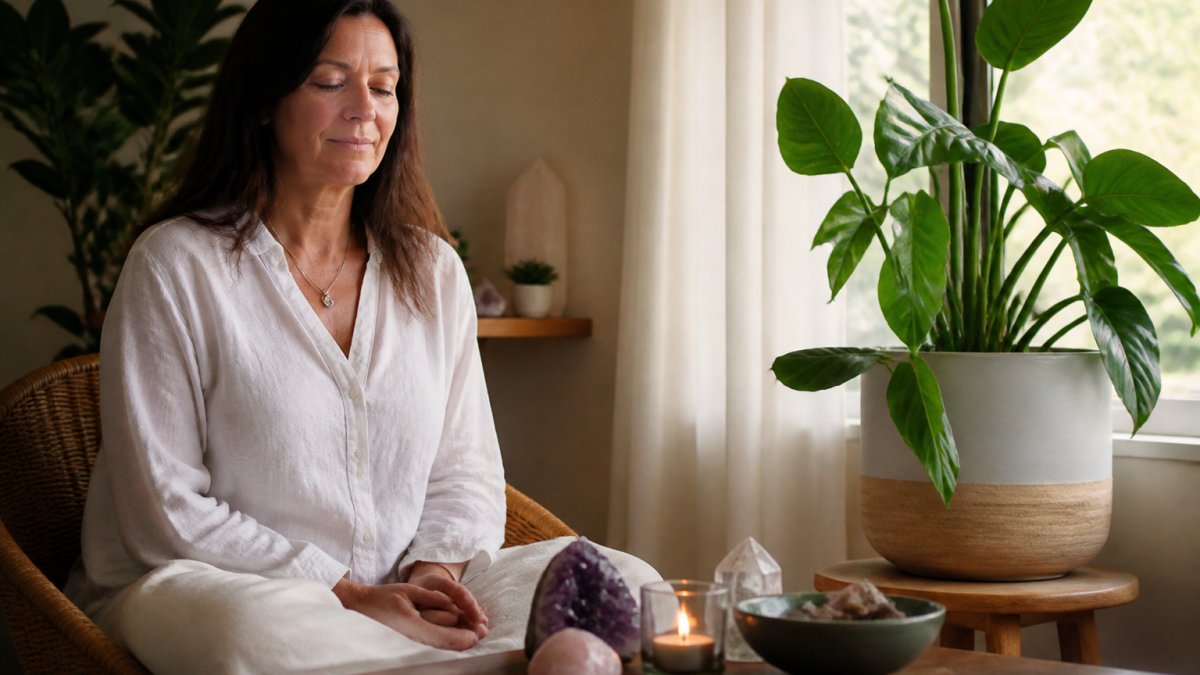
A useful starting point is to choose practices by energy level rather than ambition.
Reiki is one practice many people find supportive. It's a gentle, non-invasive practice that may feel calming to your nervous system.
Others find that working with moon cycles, creating small altars, or using tarot for reflection helps them feel more grounded.
It is also okay to bring grief, anger and doubt into your spiritual practice. You do not have to perform gratitude or certainty.
The common thread is intention.
Rebuilding identity and meaning beyond illness
One of the hardest parts of chronic illness is the identity shift. You might have been someone who was always active, always productive, always the helper. Suddenly, that's not possible. Who are you now?
This question sits at the heart of learning to live fully again chronic illness after diagnosis. Why Do I Feel Lost After Illness: Finding Yourself Again explores this process in depth, offering reflection and practical steps for reconnecting with yourself beyond your diagnosis.
Rebuilding identity often means grieving who you were while discovering who you're becoming.
Why Do I Feel Lost After Illness: Finding Yourself Again explores this process in depth, offering reflection and practical steps for reconnecting with yourself beyond your diagnosis.
Part of this work is releasing shame about what you can't do anymore. Chronic illness often comes with internalised messages that you're not productive enough, not healthy enough, not strong enough.
Finding support that honours your whole self
You don't have to navigate this alone. Finding the right support, whether professional help, community, or both, can make a profound difference in how you experience chronic illness and grief.
Support looks different for different people. Some need a therapist or counsellor, some a community of people who understand, some spiritual guidance, some practical help with daily tasks.
What matters is finding support that honours all of you, your body, your emotions, your spirit, your needs.
When you're looking for support, trust your instincts. If something doesn't feel right, you don't have to stay. If something feels safe, lean into it.
Frequently Asked Questions
What are the emotional and mental impacts of chronic illness?
Chronic illness often brings grief, identity shifts, and a sense of loss alongside the physical symptoms. Many people experience anxiety about their uncertain future, frustration with limitations, and sometimes depression as they adjust to a changed life. These emotional responses are valid, they're not weakness or failure. Your feelings matter as much as your physical health, and acknowledging them is part of learning to live fully again with what you're navigating.
How can I cope with frustration from chronic illness?
Frustration often arises when your body doesn't cooperate or when others don't understand. Try naming what you're feeling without judgment, frustration is a signal that something matters to you. Gentle movement, creative expression, or time in nature may help release it. Setting realistic expectations for yourself and communicating your needs to trusted people can ease the burden. Remember, frustration doesn't mean you're doing anything wrong; it means you're human and adapting to significant change.
How do you grieve the life you expected while living with chronic illness?
This grief is real and deserves space. Acknowledge what you've lost, the activities, plans, or version of yourself you imagined. Writing, talking with someone you trust, or spending time in nature can help you process these feelings. Grief isn't linear; it comes in waves. As you move through it, you may discover new versions of joy, meaning and connection that feel authentic to who you are now. This isn't about replacing what was lost, but about honouring both your grief and your capacity to find fullness in a different way.
Can spiritual practices help me live fully again with chronic illness?
Many people find that spiritual practices, such as Reiki, mindfulness, reflection or ritual, help them reconnect with themselves beyond their symptoms. These practices may feel supportive for processing emotions, finding inner peace and accessing a sense of meaning. They work best alongside professional medical and mental health care, not instead of it. What feels spiritual and grounding is deeply personal; the practices that resonate for you are the ones worth exploring.
How can I rebuild my identity when chronic illness has changed so much?
Identity shifts when illness becomes part of your daily life. Start by recognising that you are more than your diagnosis. Reflect on your values, what brings you quiet joy, and who you are beneath the symptoms. This might mean exploring new interests that fit your current capacity, reconnecting with parts of yourself that illness has overshadowed, or discovering unexpected strengths you've developed through this journey. Rebuilding identity is gradual and personal, there's no rush or 'right' way to do it.
What should I look for in support for chronic illness?
Seek support that validates your whole experience, physical, emotional and spiritual. A good fit means feeling heard without pressure to change who you are, having space to grieve and process emotions, and working with someone who understands that healing isn't linear. Whether that's counselling, a support group, Reiki, or a combination depends on what resonates with you. Trust your instinct about who and what feels safe and supportive.
Learning to live fully again with chronic illness is a gradual process, not a destination you reach. Some days will feel lighter than others. Some seasons will bring more grief, more frustration, more disconnection. That's all part of it. What matters is that you keep showing up for yourself with compassion, and that you're willing to ask for help when you need it. You deserve to feel heard, to feel supported, and to find your way forward, whatever that looks like for you.