 how-to
How to Cope With Grief and Chronic Illness
Table of Contents
- Understanding Grief After a Chronic Illness Diagnosis
- Grieving the Person You Were Before Chronic Illness
- How to Deal With Frustration From Chronic Illness
- Self-Compassion for Chronic Illness
- Supporting a Partner With Chronic Illness Grief
- Building Daily Coping Practices That Work
- Reconnecting With Your Life Beyond the Diagnosis
- Frequently Asked Questions
Last Updated: October 12, 2026
Understanding Grief After a Chronic Illness Diagnosis
Grief is not just about death. At The Vitality Seeker, we work with people learning how to cope with grief and chronic illness, navigating the profound loss that comes with a diagnosis.
When illness changes everything, grief looks different than you might expect. It's not always tears. Sometimes it's numbness, rage at your own body, or the quiet ache of watching your old life slip away while everyone expects you to "adjust."
What grief looks like when illness changes everything
Chronic illness grief shows up in your body first: heaviness in your chest, tightness in your throat, or a bone-deep exhaustion that sleep doesn't fix. Your mind races: Why me?
The physical symptoms of grief are just as real as the emotional ones:
- Fatigue that feels deeper than tiredness
- Difficulty concentrating or remembering things
- Changes in appetite or sleep patterns
This is your nervous system responding to loss. Your body knows something fundamental has shifted, even when your mind is still catching up.
Common emotional responses in the first weeks and months
The early days after diagnosis bring a storm of emotions. You might move between them rapidly, anger one moment, despair the next, then strange moments of calm that feel almost wrong.
Common responses include:
- Shock and disbelief ("This can't be happening to me")
- Anger at your body, at doctors, at the unfairness
- Deep sadness or hopelessness about the future
These responses are not weakness. They are your psyche's way of processing an enormous change, a normal part of how humans meet loss.
Grieving the Person You Were Before Chronic Illness
Before the diagnosis, you were someone. You had a body that worked a certain way, routines, abilities, a sense of who you were. That person is gone now.
This is the grief people often miss, the loss of your old self. Not mourning a person who died, but mourning the version of you that existed before illness redefined your life.
Recognising identity loss alongside physical changes
Your identity is built on what you do and how you move through the world. A chronic illness diagnosis strips away parts of that identity.
This loss of identity can feel as devastating as any other grief:
- Losing a career or having to step back from work
- No longer being the "strong one" in your family
- Missing out on social events and friendships
The grief here is layered. You're not just grieving what you can't do, you're grieving who you thought you'd be, and the future you imagined.
Mourning lost routines, independence, and daily activities
Chronic illness doesn't just take big things. It takes the small ones too. The rituals that made your day feel like yours.
Small losses add up:
- Morning walks without pain
- Spontaneous plans with friends
- Working without needing to rest afterwards
These small losses accumulate into a larger grief. Each one is a reminder that your life has fundamentally changed. And each one deserves to be acknowledged, not minimised.
How to Deal With Frustration From Chronic Illness
Frustration is the emotion nobody talks about enough. It's not as dramatic as despair or as socially acceptable as sadness. But it's often the emotion that sits closest to the surface, raw, sharp, and urgent.
Frustration from chronic illness is different from normal frustration. It's entangled with grief, helplessness, and the constant reminder that your body is not cooperating with your will.
Naming frustration as a valid part of grief
Frustration is not something to get over quickly. It's not impatience or bad attitude. It's a legitimate response to an illegitimate situation: your body is not doing what you need it to do.
Allow yourself to feel it fully:
- Frustration at the limitations you face daily
- Anger at the time illness steals from your life
- Irritation at having to explain yourself repeatedly
When you name frustration as grief, it loses some of its power over you. It becomes something you're moving through, not something that's broken inside you.
Practical steps to process anger and uncertainty
Frustration needs a place to go. Bottled, it becomes resentment; exploded onto others, it damages relationships. Instead, give your frustration a container.
Try these approaches:
- Write it out. Angry letters you never send. Rants that no one will read. Let the page hold your rage.
- Move it. Punch a pillow. Stomp your feet. Do gentle movement that your body can handle. Let frustration move through your nervous system.
- Sound it. Scream into a pillow. Sing loudly. Chant. Sound healing and vocal expression release what words cannot.
Uncertainty feeds frustration. You don't know what your body will do tomorrow, or if this will get better or worse. You cannot control the uncertainty, but you can control how much mental energy you spend fighting it.
Self-Compassion for Chronic Illness
You are likely harder on yourself than you've ever been on anyone else. You blame your body, judge yourself for not "handling this better," and compare your grief to others.
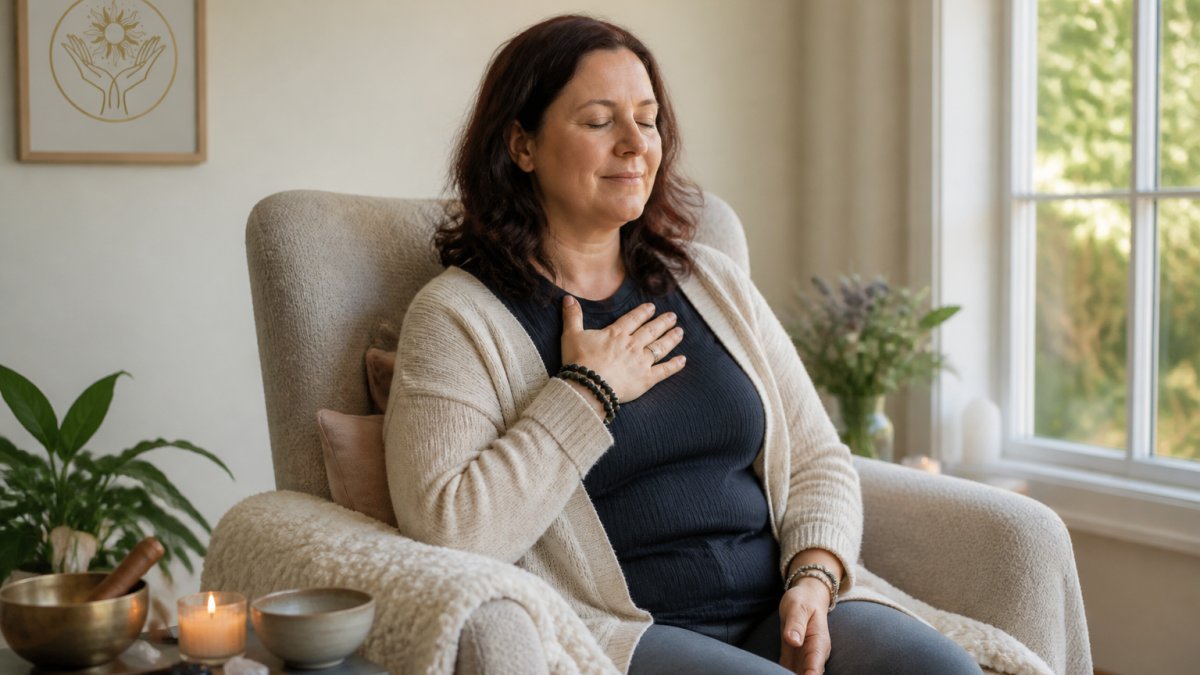
Self-compassion is not about feeling better. It's about meeting yourself with the same gentleness you'd offer a friend who is suffering.
Moving beyond blame and acceptance of what is
Blame is a trap. You blame your body for failing you, yourself for not catching the illness sooner, circumstances, genetics, past choices.
Acceptance is different. It doesn't mean you like what's happened. It means you stop spending energy fighting the reality of what is.
The shift looks like this:
- From "My body has betrayed me" to "My body is struggling and needs support"
- From "I should be able to handle this" to "This is genuinely hard, and I'm doing my best"
- From "Why did this happen to me?" to "This happened. Now, what do I need?"
Acceptance is an active choice you make repeatedly. You don't arrive at it once and stay there.
Rebuilding a sense of self that includes your diagnosis
You are not your diagnosis. But your diagnosis is now part of your life. The work is learning to hold both truths at once.
Rebuilding your sense of self means:
- Discovering who you are within the constraints of your illness
- Finding new ways to express the parts of yourself that matter most
- Grieving old identities while building new ones
This is not about "finding the silver lining" or "being grateful for the lesson." It's the harder, slower work of integrating illness into your identity without letting it consume you entirely. (Source: strategies for managing the emotional toll)
Supporting a Partner With Chronic Illness Grief
If you're supporting someone with chronic illness, you're grieving too: the life you thought you'd have together, their suffering, the loss of roles and routines. Your grief is real, even though it's different from theirs.
Understanding their grief and your own feelings
The most common mistake partners make is trying to fix the grief. You want to make it better, to say something that will help. But grief doesn't work that way.
Your partner is grieving:
- The loss of their health and independence
- The future they imagined for themselves
- Their old identity and routines
You are grieving:
- The life you planned together
- The role you thought you'd have
- The burden of supporting someone you love
These griefs are different. They don't need to be the same for both to be valid. Acknowledging the difference helps you support each other better.
Practical ways to show up without fixing or rescuing
Supporting someone with chronic illness grief means being present without needing to solve anything, sitting with their pain instead of trying to eliminate it.
Practical support looks like:
- Listening without offering advice or solutions
- Validating their grief ("This is genuinely hard")
- Asking what they need, rather than assuming
The most powerful thing you can say is often: "I'm here. I don't know what to do, but I'm here."
Building Daily Coping Practices That Work
Coping is not about positive thinking or "staying strong." It's about small, consistent practices that help your nervous system regulate and your grief move through you.
Coping practices work best when they're simple, accessible, and something you can actually do on a hard day.
Self-care foundations: sleep, movement, and nourishment
Your nervous system is dysregulated by grief and chronic illness. The foundation of coping is bringing it back into balance.
Sleep is not a luxury. It's where your body and mind process grief.
- Aim for consistent sleep times, even if you can't sleep through the night
- Create a calming bedtime ritual
- Keep your bedroom cool and dark
Movement helps grief move through your body.
- Gentle stretching or yoga
- Slow walks, even just around your home
- Tai chi or qigong
Nourishment means eating food that supports your body, not punishing it.
- Eat regularly, even if you're not hungry
- Choose foods that feel comforting and nourishing
- Stay hydrated, dehydration intensifies grief emotions
Grounding techniques for emotional overwhelm
When grief becomes overwhelming, grounding techniques bring you back into your body and the present moment.
These techniques interrupt the spiral of anxious thoughts:
- 5-4-3-2-1 technique: Name 5 things you see, 4 you can touch, 3 you hear, 2 you smell, 1 you taste
- Grounding through touch: Hold ice, feel the texture of fabric, press your feet into the ground
- Breath work: Slow, deep breathing (in for 4, hold for 4, out for 6)
These practices work because they engage your senses and bring your attention to the present moment, away from anxious thoughts about the future.
When to reach out for professional or urgent support
Grief is normal. But there are times when grief needs professional support. This is not weakness. This is wisdom.
Reach out to a professional if you're experiencing:
- Thoughts of harming yourself or others
- Complete inability to care for yourself (not eating, not sleeping, not bathing)
- Grief that feels completely overwhelming and unmanageable
Professional support might look like:
- Talking with a grief counsellor or therapist
- Working with a trauma-informed practitioner
- Joining a support group for people with chronic illness
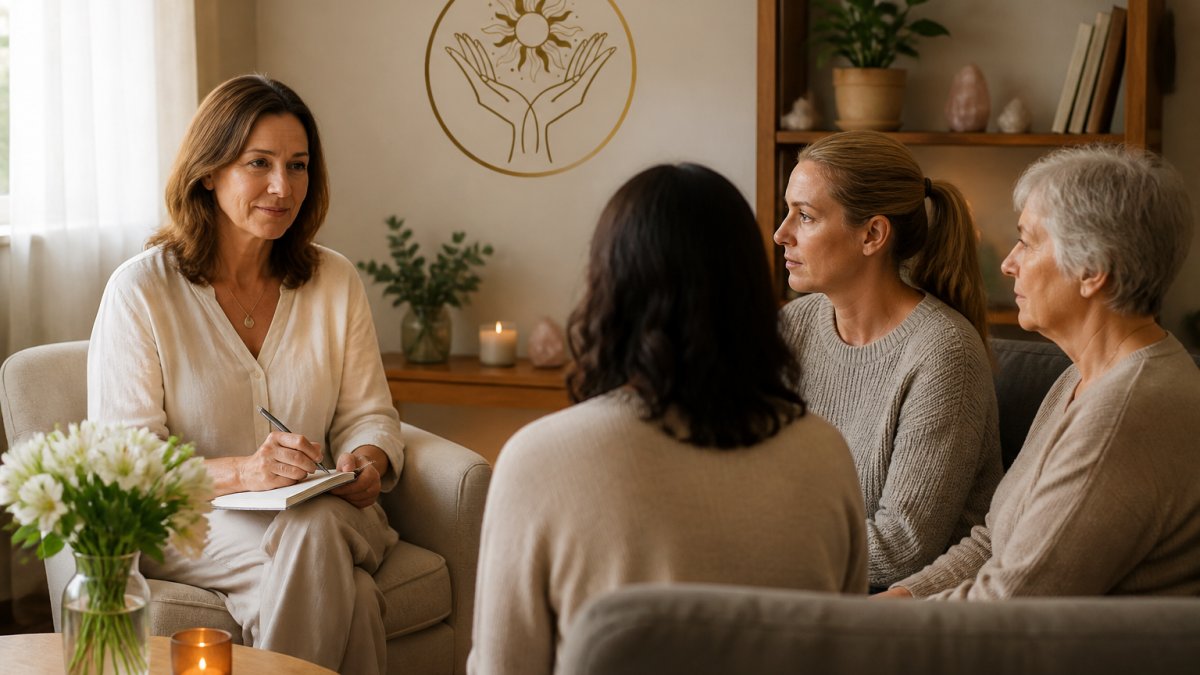
At The Vitality Seeker, we work with people navigating chronic illness grief through trauma-informed coaching, Reiki, and the Beyond the Layers program, supporting your nervous system while you process grief at your own pace.
Reconnecting With Your Life Beyond the Diagnosis
Reconnecting with your life doesn't mean "getting back to normal." Normal is gone. It means finding meaning, joy, and quality of life within your new reality.
This is the long, slow work of integration. It's not about recovery, but learning to live fully within the constraints of chronic illness.
Finding meaning and quality of life within your new reality
Meaning doesn't come from what you can do. It comes from what matters to you. Chronic illness forces you to get clear about what actually matters, because you don't have energy for anything else.
What brings you meaning now?
- Connection with people you love
- Creative expression (writing, art, music)
- Spiritual or ritual practice
Quality of life shifts when you have chronic illness. It's not measured in productivity, but in moments of peace, connection, and alignment with what matters.
Grief that returns and how to meet it with resilience
Grief doesn't end. It changes shape. You'll have moments, sometimes years later, when grief rises up again.
This returning grief is not a failure or a sign that you haven't healed.
When grief returns, meet it with the same compassion you've been learning:
- Acknowledge it without judgment
- Allow yourself to feel it fully
- Use the grounding and coping practices you've built
Resilience is not about never falling apart. It's about knowing how to put yourself back together, again and again.
You don't have to do it alone. Professional support, whether through grief coaching, Reiki, or trauma-informed therapy, can help you process this grief in a way that honours both your loss and your resilience.
Frequently Asked Questions
How can I cope with grief while living with a chronic illness?
Coping with grief and chronic illness together means acknowledging both experiences as real and valid. Start by naming what you're grieving, your health, routines, independence, or sense of self. Build a foundation with basic self-care: prioritise sleep, move your body gently, and eat nourishing foods when you can. Use grounding techniques when emotions feel overwhelming, such as focusing on your breath or five senses. Connect with others who understand; isolation intensifies grief. Consider working with a trauma-informed counselor or grief coach who can help you process loss without rushing you toward 'acceptance' before you're ready.
How do you grieve the person you were before chronic illness?
Grieving your former self is a legitimate and often overlooked part of healing. Acknowledge the specific losses: the activities you loved, the independence you had, the identity you held. Write about who you were, what mattered to you, and what you've had to let go of. Honour this grief through ritual, journaling, or talking with someone you trust. Over time, the goal isn't to 'get over it' but to integrate your past self with who you are now, finding threads of continuity and discovering new strengths that emerge through this transition.
How can I support a partner who is grieving a chronic illness?
Listen without trying to fix their experience or rush them toward positivity. Acknowledge their losses alongside their diagnosis. Ask what they need rather than assuming. Show up consistently, help with practical tasks like meals or household work, but also make space for their emotions. Be honest about your own feelings too; supporting someone through grief doesn't mean you disappear. Encourage them to seek professional support if they're struggling deeply. Most importantly, validate that their grief is real and that healing isn't linear.
When should I seek professional support for grief and chronic illness?
Consider reaching out to a counselor, therapist, or grief coach if grief feels overwhelming, persistent, or if you're struggling to manage daily life. If you notice signs of depression, hopelessness, withdrawal, difficulty sleeping or eating beyond what your illness causes, professional support can help. If you're having thoughts of self-harm or feel unsafe, contact a crisis service immediately. There's no 'right time' to seek help; it's a sign of strength and self-compassion, not weakness. A trauma-informed practitioner can help you process grief at your own pace without pressure to change who you are.