 how-to
Move From Overwhelm to Calmness: A Trauma Therapy Guide
Table of Contents
- Understanding Overwhelm and Your Nervous System Response
- The Window of Tolerance and Trauma Recovery
- Grounding Techniques for Trauma: Anchoring to the Present
- Somatic Exercises for Overwhelm: Moving Towards Calm
- Coping Strategies for Traumatic Stress: Building Resilience
- Adapting Practices for Your Life and Environment
- When to Seek Professional Support
- Your Path From Overwhelm to Inner Calm
- Frequently Asked Questions
Last Updated: October 11, 2026
Understanding Overwhelm and Your Nervous System Response
When your body is in overwhelm, your nervous system is working overtime. Your heart races. Your breath becomes shallow. Your muscles tense. This isn't a character flaw, it's a biological response to perceived threat.
Overwhelm happens when your nervous system receives too much input at once. Trauma, chronic illness, grief, and major life changes all trigger this state. Your body shifts into survival mode.
At The Vitality Seeker, we work with clients who experience this regularly.
What happens in your body during overwhelm
Your nervous system has two main branches: the sympathetic (fight-or-flight) and parasympathetic (rest-and-digest). When overwhelmed, your sympathetic system dominates.
What you notice physically:
- Racing heart and shallow breathing
- Muscle tension, especially in shoulders and jaw
- Difficulty concentrating or thinking clearly
- Feeling disconnected from your body
- Digestive issues and fatigue
- Sleep disruption
Your amygdala, the brain's alarm centre, is activated (Amygdala Activity, Fear, and Anxiety: Modulation by Stress). It sends danger signals throughout your body. This was useful when threats were physical.
Understanding this helps. You're not broken. Your body is doing exactly what it evolved to do.
Recognising the signs of dysregulation
Dysregulation means your nervous system is out of balance. It's stuck in a protective state when safety isn't threatened.
Common signs include:
- Constant worry or racing thoughts
- Irritability or emotional reactivity
- Difficulty sleeping or oversleeping
- Physical pain without clear cause
- Feeling numb or disconnected
- Avoidance of people or activities
- Panic or anxiety that seems to appear without reason
These signs tell you something important: your nervous system needs support to find its way back to calm.
The Window of Tolerance and Trauma Recovery
Your window of tolerance is the zone where you can function well. Inside this window, you can think, feel, and respond. Outside it, you're either hyperaroused (overwhelmed, anxious, panicked) or hypoaroused (shut down, numb, disconnected).
Trauma narrows this window. Chronic stress shrinks it further. The goal of healing is to widen it, to expand the range where you can stay regulated.
Finding your optimal window
Your window is unique. What triggers overwhelm for one person might feel manageable to another. Your history, your body, your current circumstances all shape it.
To find your window:
- Notice when you feel calm and present
- Track what helps you stay there
- Identify what pushes you outside it
- Observe how long it takes to return to calm
Start small. If you can stay regulated for 10 minutes, that's your baseline. Build from there. Gradually, your nervous system learns that safety is possible. Your window expands.
This is titration, pacing your healing so your body doesn't become more dysregulated in the process.
Distinguishing overwhelm, shutdown, panic, and dissociation
These states feel different and need different responses.
Overwhelm feels like too much input. Your body is activated, alert, flooded.
Shutdown is the opposite. Your body withdraws. You feel heavy, numb, disconnected. Movement is difficult. Motivation disappears.
Panic is acute overwhelm. Your nervous system perceives immediate danger. Your heart races.
Dissociation is disconnection from your body or surroundings. You feel like you're watching yourself from outside.
Knowing which state you're in helps you choose the right technique. Calming exercises work for overwhelm.
Grounding Techniques for Trauma: Anchoring to the Present
Grounding brings you back to now. When your nervous system is caught in past trauma or future worry, grounding reconnects you with present safety.
Sensory grounding practices
Your five senses are your anchor.
The 5-4-3-2-1 technique: Notice five things you can see.
This simple practice interrupts the overwhelm cycle.
Temperature grounding: Hold ice in your hand or splash cold water on your face.
Texture grounding: Touch something with a distinct texture, rough bark, smooth stone, soft fabric.
Sound grounding: Listen to music, nature sounds, or your own voice.
These practices work because they're immediate. You don't need to think about them.
Orienting and reconnecting with safety
Orientation means noticing where you are. It's a gentle way to signal safety to your nervous system.
Slow, deliberate looking: Turn your head slowly and notice your surroundings. Look at colours, shapes, objects. Notice what's familiar.
Naming what you see: Silently name objects around you.
Noticing safety: Ask yourself: Am I physically safe right now?
These practices are gentle. They don't force calm. They simply redirect your attention to present safety.
Somatic Exercises for Overwhelm: Moving Towards Calm
Somatic means body-based. Your body holds trauma. It also holds the key to release.
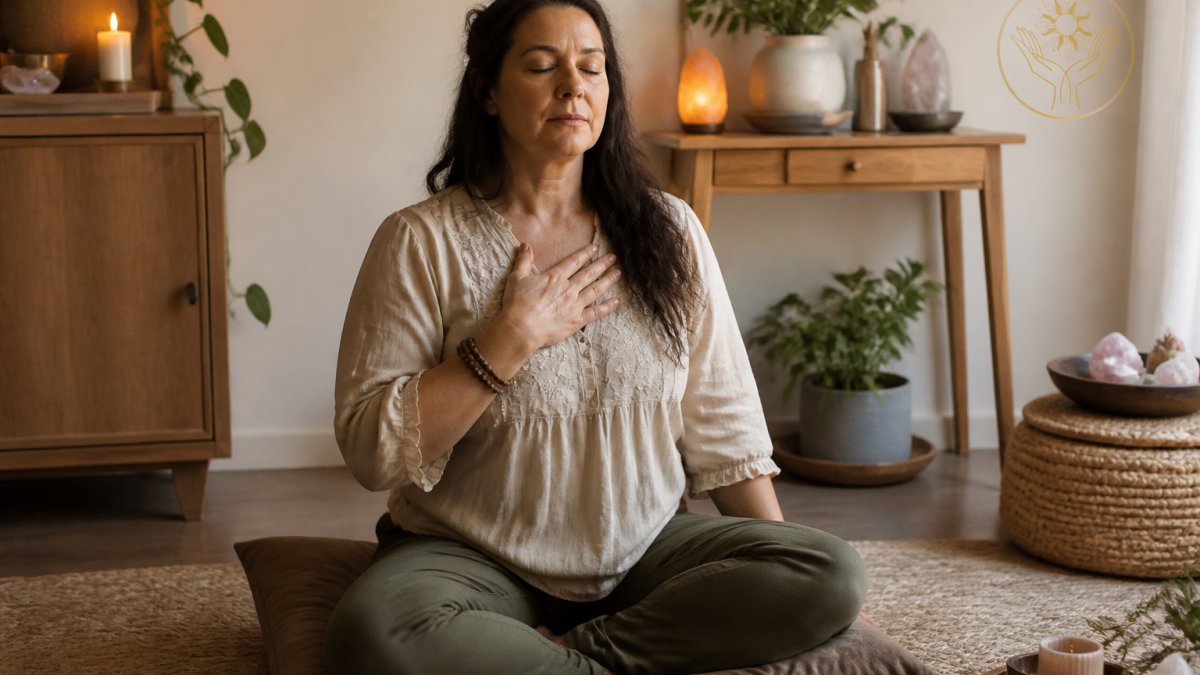
Gentle body-based practices
Your body wants to move.
Shaking or tremoring: Stand with knees slightly bent. Let your body shake gently.
Slow, intentional movement: Walk slowly. Feel each foot contact the ground. Move your arms gently.
Progressive muscle relaxation: Tense a muscle group for five seconds, then release.
Self-massage: Gently massage your shoulders, neck, or hands. Slow, rhythmic touch signals safety.
These practices work because they're within your control. You decide the pace, the intensity, the duration.
Slow breathing and the longer exhale
Your breath is the bridge between your conscious and unconscious nervous system.
The 4-6-8 technique: Breathe in for a count of four. Hold for a count of six.
The longer exhale is crucial. It activates your parasympathetic nervous system, the calm system (The relaxation effect of prolonged expiratory breathing).
Box breathing: Inhale for four counts. Hold for four. Exhale for four. Hold for four. The evenness creates rhythm.
Start with just three rounds. Your nervous system doesn't need to be forced. Gentle, consistent practice works better than intense effort.
Coping Strategies for Traumatic Stress: Building Resilience
Resilience isn't about never feeling overwhelmed. It's about moving through overwhelm and returning to calm.
Titration and pacing your healing
Titration means taking small doses. In trauma healing, this means processing small pieces of your experience at a time, rather than being flooded by the whole thing.
You don't heal by forcing yourself to face everything at once. You heal by:
- Working with small pieces of difficult material
- Pausing when your nervous system becomes dysregulated
- Returning to calm before continuing
- Building gradually over time
This is why longer-term support, like the nine-week Beyond the Layers program at The Vitality Seeker, is designed to give your nervous system time to learn safety. Titration respects that timeline.
What to do when a technique makes distress worse
Sometimes a calming technique backfires. You start breathing slowly and feel more anxious. You try grounding and feel more disconnected.
When a technique makes things worse:
- Stop immediately. Don't push through.
- Return to something that feels safer
- Notice what happened without judgment
- Try a different technique next time
Your nervous system is communicating. It's saying this particular approach doesn't feel safe right now. Listen to that message.
Some people find that slowing down activates more anxiety. For them, gentle movement or activation works better.
There's no universal right technique. There's only what works for your nervous system, at this moment, in this context.
Adapting Practices for Your Life and Environment
Healing doesn't happen in a therapist's office alone. It happens in your daily life.
Accessibility and gentle pacing
You don't need a quiet room or 30 minutes to practice. You can ground yourself in a queue, at work, or while caring for others.
Micro-practices:
- One conscious breath while waiting
- Noticing five things you can see while in a stressful moment
- Touching your feet to the ground while sitting
- Humming while doing dishes
These small practices accumulate. They teach your nervous system that calm is accessible anytime, anywhere.
If you have mobility limitations, movement-based practices can be adapted. Gentle hand movements. Seated practices. Breathing work. The principle remains: small, manageable steps toward regulation.
Practising between therapy sessions
Healing accelerates when you practise between sessions. This doesn't mean rigid routines. It means noticing what helps and returning to it.
Keep a simple log:
- What practice did you use?
- How did you feel before?
- How did you feel after?
- What did you notice?
Over weeks, patterns emerge. You'll see which practices help you most. Your nervous system learns from repetition.
When to Seek Professional Support
Self-help practices are powerful. They're also not enough for everyone.
Recognising when self-help is not enough
Professional support is important if you:
- Feel unable to function in daily life
- Have persistent thoughts of harming yourself
- Experience flashbacks or nightmares regularly
- Feel isolated despite practising these techniques
- Have trauma that feels too large to hold alone
- Are using substances to manage overwhelm
- Feel no improvement after consistent practice
These aren't signs of weakness. They're signs that your nervous system needs more specialised support.
Finding trauma-informed care
Trauma-informed practitioners understand how trauma affects the nervous system. They work at your pace. They don't push you toward healing faster than your body can manage.
Look for practitioners who:
- Understand nervous system regulation
- Offer choice and control in sessions
- Work collaboratively rather than prescriptively
- Respect your pace and boundaries
- Have training in trauma-specific approaches
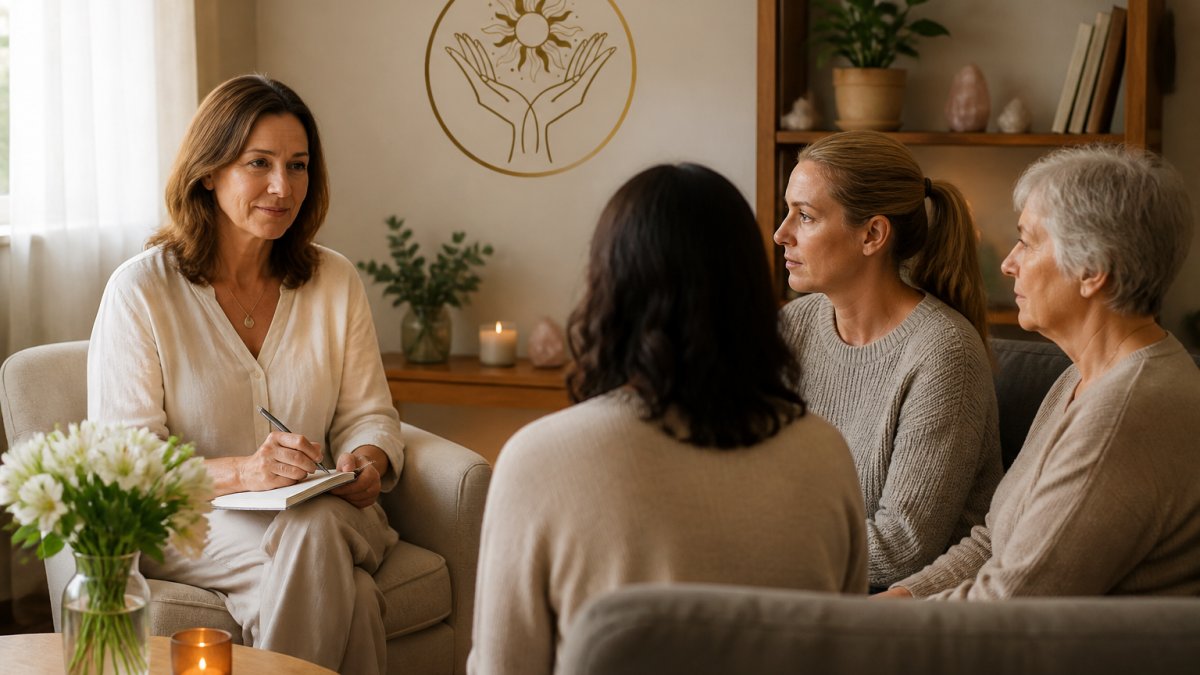
The Vitality Seeker offers trauma-informed grief coaching and somatic healing practices. Liz Walsh brings lived experience with chronic illness, grief, and trauma. Her approach honours your pace and your wisdom about what you need.
Your Path From Overwhelm to Inner Calm
The journey to move from overwhelm to calmness isn't linear. Some days your nervous system feels accessible. Other days, simple grounding feels impossible. This variation is normal.
Your nervous system has been protecting you. Healing means gradually teaching it that safety is possible. That you can feel calm without losing your guard.
The practices in this guide are starting points. Your body will tell you what works. Listen to that wisdom. Trust the process.
Frequently Asked Questions
How can I move from overwhelm to calmness when I feel frozen or stuck?
When overwhelm leads to shutdown or freezing, start with the smallest, gentlest step. Grounding techniques like noticing five things you can see, four you can touch, and three you can hear help orient your nervous system to safety without forcing intensity. Slow breathing, especially lengthening your exhale, signals calm to your body. If nothing feels accessible, simply resting without self-judgment is valid. Move at your pace, calmness isn't about speed but about reconnecting with your body's capacity to feel safe.
What are the best grounding techniques for trauma when anxiety feels too big?
Grounding techniques for trauma work by anchoring your attention to the present moment, away from traumatic memories. Sensory practices are often most accessible: hold ice or feel texture, listen to a specific sound, name objects around you by colour. Movement-based grounding, pressing your feet firmly into the floor, gentle stretching, engages your body's natural regulation. Start with whichever feels least threatening. Titration matters: use smaller doses if full techniques feel overwhelming. Consistency between therapy sessions builds resilience over time.
How do I know if my nervous system needs somatic exercises or if I should rest instead?
Somatic exercises for overwhelm are most helpful when your body is stuck in activation, racing thoughts, tension, restlessness. Gentle movement, breathwork, or body awareness practices help discharge that activation. If you feel numb, collapsed, or extremely fatigued, rest and slower practices like restorative breathing may serve better. Notice what your body is telling you. Trauma-informed care honours both activation and shutdown. If you're unsure, a trauma-informed therapist can help you distinguish your state and choose the right approach for that moment.
When should I seek professional support instead of managing overwhelm on my own?
Self-help practices support your healing, but professional support becomes important when overwhelm is persistent, when techniques consistently make distress worse, or when PTSD symptoms interfere with daily life. If you experience severe dissociation, intrusive memories, or emotional flashbacks that self-regulation cannot touch, trauma-informed therapy provides the safety and skill needed. There is no shame in reaching out, it is a sign of self-compassion. A trauma-informed therapist can guide you through complex nervous system responses and help you build lasting resilience.
Ready to move from overwhelm to calmness with professional support? Book a consultation with The Vitality Seeker. Liz Walsh offers trauma-informed grief coaching, Reiki, and the nine-week Beyond the Layers program, designed to help you reconnect with your vitality and live fully again. Sessions are available in Kogarah and Cronulla, with mobile Reiki across Sydney and distance sessions worldwide. Beyond the layers, you'll find yourself.